
Is your cat a good cat? Then buy today’s sponsor, a Big Ole Tub of Cat Treats for just $15!
Click Here to buy a Big Ole Tub of Cat Treats.
Amazon Affiliate Link
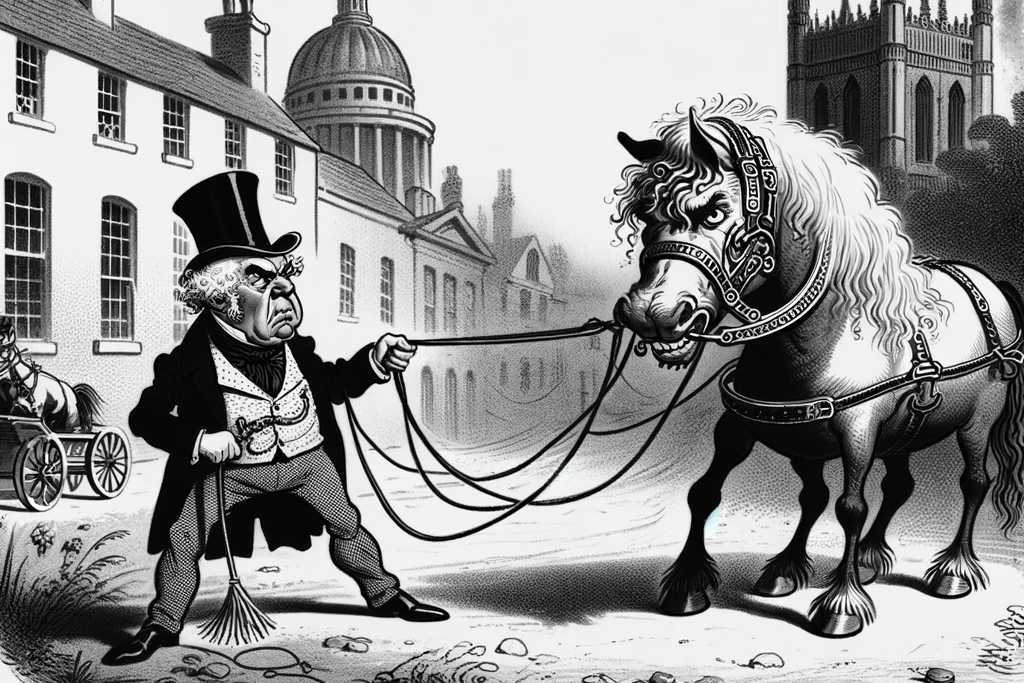
LONDON, February 18th, 1824 — In a stirring turn of events that highlights the enduring struggle between tradition and the march of modern governance, the Isle of Man finds itself at the heart of a constitutional controversy that resonates far beyond its shores. The catalyst for this drama is none other than a series of unilateral alterations to the island’s criminal law, purportedly instigated by the Duke of Atholl, that has sparked a fervent debate about the limits of executive power and the sanctity of local legal traditions.
The Isle of Man, a quaint yet strategically significant outpost, has long enjoyed a degree of autonomy that is both a privilege and a point of contention. The crux of the current dispute lies in the Duke of Atholl’s recent actions, which effectively sideline the House of Keys, the island’s traditional legislative body, from its historical role in the criminal justice system. This move, reportedly made at the behest of His Majesty’s Government without the customary dialogue or consent from the local legislative body, has ignited fears of a slippery slope toward arbitrary governance that could extend to other territories under British influence.
Mr. Curwen, taking the floor with a sense of urgency, has called for transparency and accountability, demanding the release of documents that could shed light on the rationale behind such a significant shift in governance. The House of Keys, a 24-member assembly that has been the bedrock of Manx law and order, finds itself in an unprecedented predicament. Historically, the assembly’s approval was essential for the enactment and amendment of laws—a testament to the island’s democratic ethos and a safeguard against the whims of singular authority.
The Duke’s decision to bypass this established mechanism, citing instructions from the Home Department, has not only raised eyebrows but also concerns about the erosion of judicial independence and the potential for miscarriages of justice. Critics argue that without the checks and balances traditionally provided by the House of Keys, the risk of legal overreach and the undermining of public trust in the legal system is alarmingly high.
The government’s stance, articulated by Mr. Peel, suggests a different perspective. The move is defended as a necessary clarification of the legal process, aimed at streamlining governance rather than eroding democratic principles. Yet, the absence of a formal consultation process with the House of Keys or an adequate transition plan to preserve judicial fairness has left many skeptical of the government’s assurances.
This controversy is not merely a local issue but a litmus test for the British government’s approach to governance in its territories. The Isle of Man’s situation underscores the delicate balance between modernizing legal frameworks and respecting historical governance structures. It also raises critical questions about the role of traditional bodies in contemporary governance and the mechanisms in place to ensure that changes to centuries-old practices are made transparently, democratically, and with due regard for the rights and traditions of the people affected.
As the debate unfolds, the eyes of the world are on the Isle of Man, serving as a reminder of the complexities inherent in governing diverse territories in an age where the principles of democracy and autonomy are more cherished than ever. The resolution of this dispute may well set a precedent for how changes to legal and governance structures are navigated in regions with unique historical and legal legacies, making it a case of not just local but global significance.
⁂
The content on this website is for entertainment purposes only.
Much of it has not been thoroughly reviewed by humans,
although we do get a blast from reading it ourselves.
But it should absolutely not be cited
as a source for anything other than itself.
We use OpenAI’s GPT-4 API to extract text
from the public-domain archive of The Times,
and rewrite this to contemporary standards.
Graphics are also largely AI-generated.
This website is supported by advertising and donations!
Please consider supporting today’s sponsor,
Big Ole Tub of Cat Treats by clicking here to learn more.
Please also consider making a donation here—
we get so excited every time we hear the bell ding,
and there’s no donation too small!



 The Long Ago Times
Leave a comment