

Look, you obviously have a phone. It’s 2024.
Sometimes, though, you need two phones, or your current phone breaks at the worst time for your budget.
Solve either problem with today’s sponsor, a $25 TracPhone!
Amazon Affiliate Link
LISBON, January 29th, 1824 — In a recent edition of the Lisbon Gazette dated the 29th of last month, readers were presented with a thoughtful piece on the dynamics of revolutions and factional politics. Authored seemingly by a clergyman—judging by the prolific use of biblical references and the overall tone—it appears this commentary may have originally been voiced from the pulpit amidst the backdrop of the monarch’s reinstatement to undivided rule. The writer draws an analogy between Portugal’s brief experiment with constitutional freedom and a harsh winter storm, portraying the subsequent return to monarchical absolutism as the arrival of a serene spring.
Celebrated through the vibrant rhetoric reminiscent of Trappist declarations, the king is lauded as a beacon of hope, his reign purportedly ending the nation’s sufferings and reinstating its former dignity. However, the piece is marked by a lack of substantive argument, leaning heavily on grandiloquent language and a superficial engagement with logical principles.
This editorial is noteworthy for its divergence from the typically vengeful tone espoused by Spain’s zealots, advocating instead for mercy and the importance of forgetting past grievances in the aftermath of the Peninsula’s upheavals. The author’s progressive stance extends to criticizing the intolerance of Spain’s Philip II, commending France’s Henry IV for his concessions to Protestants, and lamenting Louis XIV’s revocation of the Edict of Nantes.
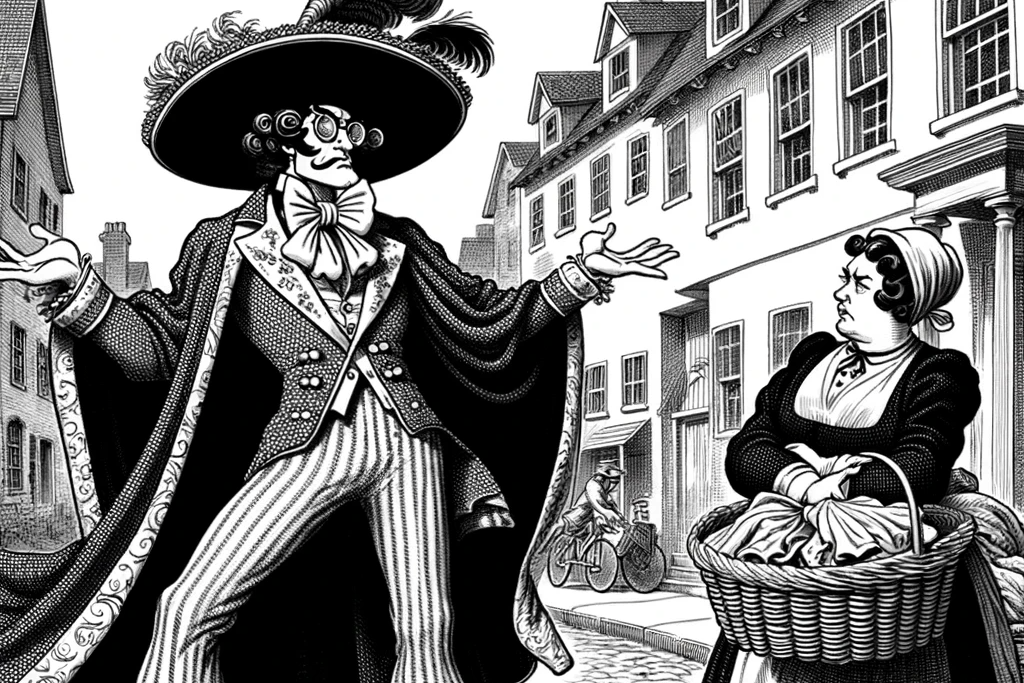
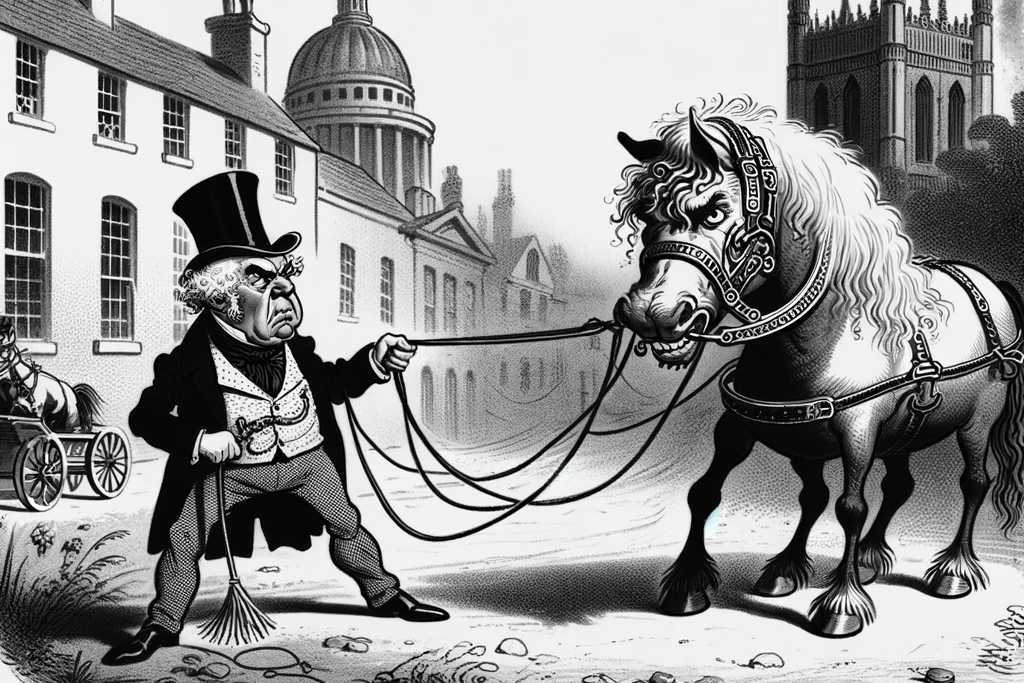
In an intriguing passage, the writer implicitly contrasts Ferdinand of Spain and his supporters with a metaphor of scavengers exploiting turmoil for personal gain, hinting at a broader critique of opportunism and extremism in times of crisis. Despite the strong plea for tolerance and forgiveness, the article stops short of addressing the fundamental issue of establishing safeguards for future governance—missing an opportunity to argue for the creation of institutions capable of balancing royal authority with the protection of citizens’ rights.
⁂
The content on this website is for entertainment purposes only.
Much of it has not been thoroughly reviewed by humans,
although we do get a blast from reading it ourselves.
But it should absolutely not be cited
as a source for anything other than itself.
We use OpenAI’s GPT-4 API to extract text
from the public-domain archive of The Times,
and rewrite this to contemporary standards.
Graphics are also largely AI-generated.
This website is supported by advertising and donations!
Please consider supporting today’s sponsor,
a $25 TracPhone from Amazon,
by clicking here to learn more.
Please also consider making a donation here—
we get so excited every time we hear the bell ding,
and there’s no donation too small!



 The Long Ago Times
Leave a comment