

Do you buy printer paper in bulk? Of course not! You use it, what? Like twice a month?
But, when you do run out, get it cheap and fast with today’s sponsor: A ream of printer paper from Amazon! 🎉
Amazon Affiliate Link
PARIS, February 18th, 1824 — In a late-night update, Parisian newspapers from Sunday have brought to light the latest developments from Madrid. A notable segment in the Moniteur‘s official discourse confirms the news, shedding light on King Ferdinand’s decision to use the telegraph for announcing his decree in Paris—a move that, in hindsight, appears to lack both timeliness and strategic foresight. This act, meant to showcase decisive governance, has instead been rendered a mere symbol of belated regret. Ferdinand’s decision, akin to declaring free trade with Gibraltar as with South America, now stands as a testament to missed opportunities and a display of weakness rather than strength.
The Greek Isles’ Stand on Smyrna: A Balancing Act
A correspondence from Corfu reveals a collective appeal by European Consuls in Smyrna to the authorities of Ipsara, urging restraint against Smyrna and its coastline. This plea, endorsed by England, France, Austria, and the Netherlands, aims to shield European Christians in Asia Minor from conflict repercussions. Drawing parallels with historical precedents set by Russia and Admiral Duckworth, the request seeks a proclamation from Greek islanders to deter their fleet from hostilities. However, Ipsara’s response underscores a refusal to compromise on their combative rights against the Turks, despite their willingness to protect European interests, indicating a complex balancing act between national duty and international diplomacy.
The Declining Health of the Princess of Conde
Reports from the same publications highlight a concerning decline in the Princess of Conde’s health, noting her worsening condition and fading memories, casting a shadow over her prospects for recovery.
Spain’s Economic and Diplomatic Maneuvers
An official dispatch reveals Spain’s groundbreaking decree to liberalize trade with its colonies, positioning Spanish commerce on equal footing internationally. This move, coupled with the acknowledgment of debts to France and the signing of an occupation treaty, marks a pivotal moment in Spanish economic policy. Additionally, the anticipated arrival of the Marquis de Mataflorida in Paris and military redeployments further underline Spain’s strategic diplomatic and military reshuffling in the European landscape.
Amnesty and Governance: Spain’s Path Forward
Madrid’s whispers of an impending amnesty decree signal a nuanced approach to governance post-restoration. This initiative seeks to reconcile with the monarchy’s loyalists, promising clemency and favor restoration. The potential revival of the ancient Cortes sparks debate, with its structure and powers reflecting a governance model far removed from liberal aspirations. This model, rooted in historical precedence, emphasizes the monarch’s legislative supremacy, challenging contemporary notions of popular sovereignty and democratic governance.
⁂
The content on this website is for entertainment purposes only.
Much of it has not been thoroughly reviewed by humans,
although we do get a blast from reading it ourselves.
But it should absolutely not be cited
as a source for anything other than itself.
We use OpenAI’s GPT-4 API to extract text
from the public-domain archive of The Times,
and rewrite this to contemporary standards.
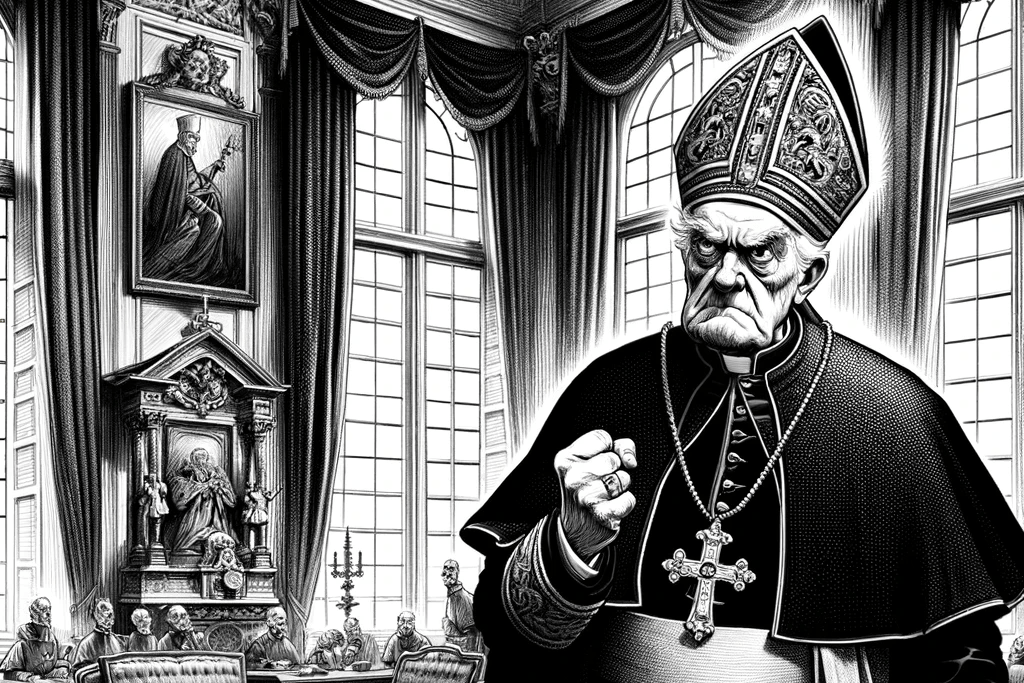
Graphics are also largely AI-generated.
This website is supported by advertising and donations!
Please consider supporting today’s sponsor,
a ream of printer paper from Amazon,
by clicking here to learn more.
Please also consider making a donation here—
we get so excited every time we hear the bell ding,
and there’s no donation too small!


 The Long Ago Times
Leave a comment