
Are you still making ice cubes in an ice cube tray? Can you honestly answer us why? Technology solved this problem so long ago!
Try today’s sponsor, a Tabletop Ice Cube Maker!
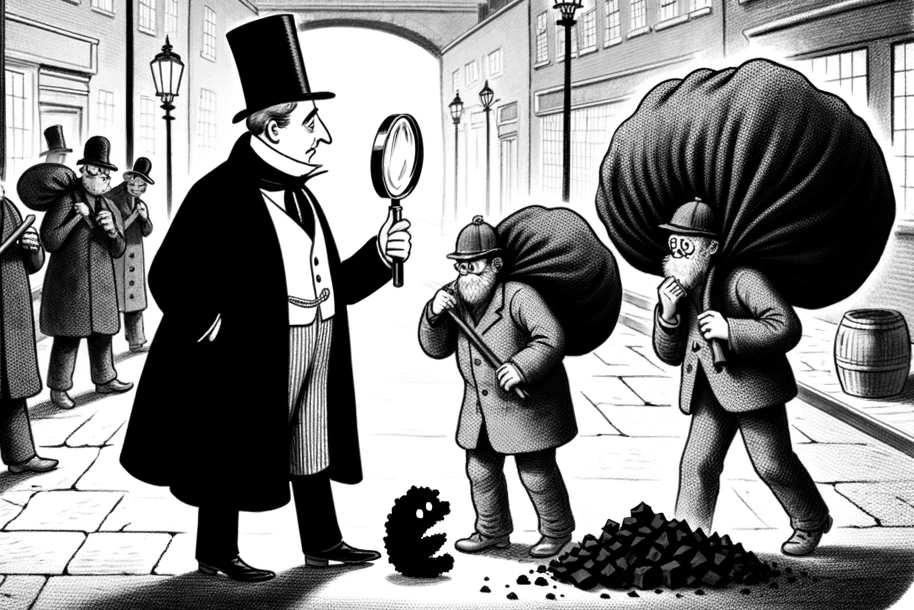
LONDON, February 12th, 1824 — In the latest expose from the corridors of the Common Council, a report on the coal industry has emerged that is as dense as the commodity it scrutinizes, yet it sheds little light on the murky waters of coal pricing and distribution. The Committee, entrusted with the investigation, appears to have navigated through the complex issue with the finesse of a coal barge adrift in a storm, ultimately failing to anchor at the heart of the matter: the persistent high cost of coal, a vital energy source for the nation’s hearths and industries.
The document, while rich in pages, is poor in solutions, offering a mere suggestion to appoint twelve additional coal meters as a panacea to the ailments plaguing the coal market. This recommendation, as superficial as it is insufficient, skirts around the core issues of monopoly, market manipulation, and the opaque practices that inflate coal prices, leaving consumers and especially the labouring classes in a lurch.
The report, ostensibly a thorough investigation, barely scratches the surface of the coal conundrum. It reveals a startling lack of depth in addressing the reasons behind the exorbitant prices, choosing instead to linger on procedural aspects of coal delivery from ship to shore. The Committee’s reluctance or inability to delve into the mechanisms of price-setting, market monopolies, and the dubious practices of coal merchants suggests a myopic view that fails to recognize the broader implications of coal pricing on society.
Historical context underscores the gravity of the oversight. In December 1823, public outcry over coal prices prompted a fleeting dip in the market, hinting at the potential for regulatory or investigative action to effect change. Yet, despite past fluctuations and the evident capacity for prices to be manipulated, the Committee’s report offers no substantive analysis or action plan to tackle the root causes of high prices or to dismantle the monopolistic structures that underpin the market.
Moreover, the report’s limited scope and the Committee’s apparent satisfaction with the status quo—a market characterized by obscure transactions and a lack of transparency—speak volumes about the missed opportunity to advocate for meaningful reform. The suggestion to increase the number of meters, while a nod to the inefficiencies within the system, is a band-aid solution to a problem that requires surgical precision.
The revelations—or lack thereof—contained within the report paint a picture of a regulatory body at odds with the interests of the public it serves. The mention of coal merchants gaming the system to their advantage, coupled with the Committee’s indifference to the stratagems employed to maintain high prices, is particularly galling. The practice of importing coal only to buy it back at inflated prices to set market rates is a glaring example of the manipulation at play, yet the Committee’s report stops short of condemning or even thoroughly investigating these practices.
The diversity of coal types under the “Wall’s End” denomination, and the potential for consumers to be misled and overcharged, is another aspect touched upon but not explored in depth. This lack of scrutiny extends to the entire supply chain, from pit to port, leaving unanswered questions about the fairness and transparency of the coal market.
In an era where transparency, fairness, and environmental stewardship should be paramount, the Common Council’s report on coal is a stark reminder of the challenges ahead. It is a call to action for policymakers, industry stakeholders, and the public to demand a more equitable, transparent, and sustainable energy market. The Times, observing the proceedings with a critical eye, cannot help but advocate for a reevaluation of the coal industry’s regulatory framework, one that breaks the stranglehold of monopolies, fosters competition, and aligns with the broader societal needs for affordable, clean energy. Without such reforms, the report stands as a testament to a missed opportunity to light a fire under a complacent industry, leaving consumers out in the cold.
⁂
The content on this website is for entertainment purposes only.
Much of it has not been thoroughly reviewed by humans,
although we do get a blast from reading it ourselves.
But it should absolutely not be cited
as a source for anything other than itself.
We use OpenAI’s GPT-4 API to extract text
from the public-domain archive of The Times,
and rewrite this to contemporary standards.
Graphics are also largely AI-generated.
This website is supported by advertising and donations!
Please consider supporting today’s sponsor,
Tabletop Ice Cube Maker by clicking here to learn more.
Please also consider making a donation here—
we get so excited every time we hear the bell ding,
and there’s no donation too small!





 The Long Ago Times
Leave a comment