
Is your cat a good cat? Then buy today’s sponsor, a Big Ole Tub of Cat Treats for just $15!
Click Here to buy a Big Ole Tub of Cat Treats.
Just a special note on this one, to remind readers that the below content reflects the views of The Times editorial staff in 1824, and not our own. Thank you! 🙏
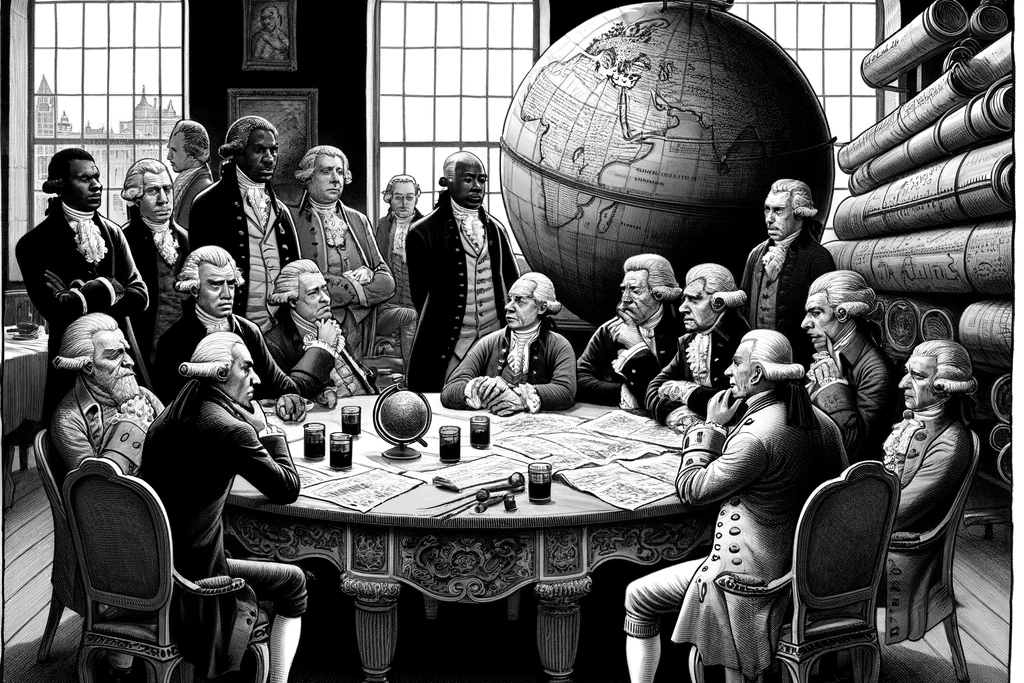
LONDON, February 11th, 1824 — In a notable gathering at the City of London Tavern yesterday, proprietors of West Indian estates convened to deliberate on the pressing concerns that currently beset the West Indies. It’s imperative to acknowledge the legitimate grievances of these proprietors, who stand deserving of every ounce of consideration the government can offer, without sidelining the supreme importance of human rights. Their resolution to petition the KING in these challenging times is a move that, while commendable, leaves us pondering the extent of relief his Majesty can extend in a personal capacity. The proprietors’ claim to their lands and, controversially, to their slaves, is rooted in a legal tradition that, though longstanding, invites a complex moral and ethical debate about the powers that grant such rights and the potential to rescind them.
The air is rife with speculation, particularly among abolitionist circles, about a possible compromise where the government would buy out the planters, thus transitioning the islands to a model of cultivation devoid of slavery, with the lands held as national assets. Despite the intrigue this proposal may hold, it is, upon closer examination, a quixotic notion fraught with impracticalities; the logistics alone render it a non-starter. The focus, therefore, should shift towards more attainable objectives that align with both policy and humanity.
Were we in the nascent stages of acquiring the West Indies, it’s incontrovertible that the cultivation of these lands would be undertaken by free laborers. Yet, the proposition of abruptly declaring the entire slave population free, leaving them to choose work at their discretion, is fraught with peril. The consequences of such a precipitous act could range from negligible to catastrophic, with the potential for widespread plunder by those abstaining from work. Consequently, abolitionists have judiciously distanced themselves from advocating for immediate emancipation, instead endorsing a phased approach that gradually accustoms slaves to the concept of freedom. This includes the elimination of corporal punishment and the allocation of additional personal time for labor, beyond the Sabbath.
The response from planters, querying the fairness of an extra day of leisure in comparison to English labor standards, opens a broader discourse on the role of legislative intervention in labor relations—a practice far from uncommon in England. Historical precedents abound where laborers have been afforded protections and concessions, challenging the planters’ stance. This editorial stance underlines that the debate transcends mere policy; it is a profound question of humanity, necessitating a nuanced approach that harmonizes the interests of all stakeholders involved.
The dialogue surrounding the West Indian predicament underscores a pivotal moment in our moral and social evolution, highlighting the imperative for policies that are both humane and pragmatic. As we navigate these complex waters, the lessons of history and the principles of justice must guide our course, ensuring that the path we choose honors the dignity of every individual involved.
⁂
The content on this website is for entertainment purposes only.
Much of it has not been thoroughly reviewed by humans,
although we do get a blast from reading it ourselves.
But it should absolutely not be cited
as a source for anything other than itself.
We use OpenAI’s GPT-4 API to extract text
from the public-domain archive of The Times,
and rewrite this to contemporary standards.
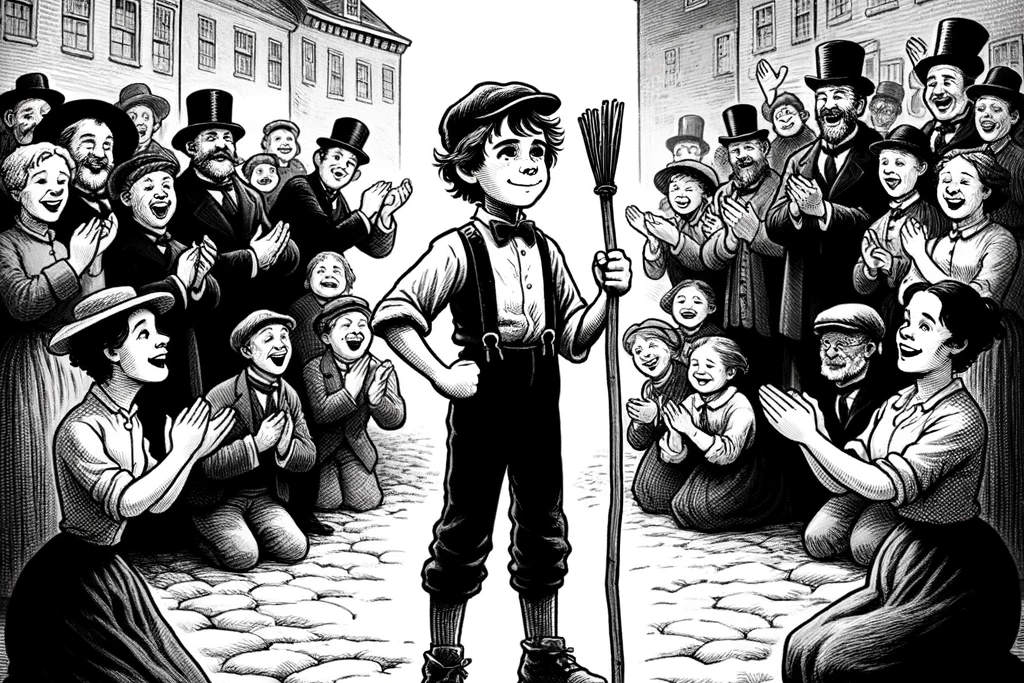
Graphics are also largely AI-generated.
This website is supported by advertising and donations!
Please consider supporting today’s sponsor,
Big Ole Tub of Cat Treats by clicking here to learn more.
Please also consider making a donation here—
we get so excited every time we hear the bell ding,
and there’s no donation too small!



 The Long Ago Times
Leave a comment