
Today’s sponsor is Cheap, Nice Looking Earrings!
They look nice, why not? You can click here to buy them and support us at the same time!
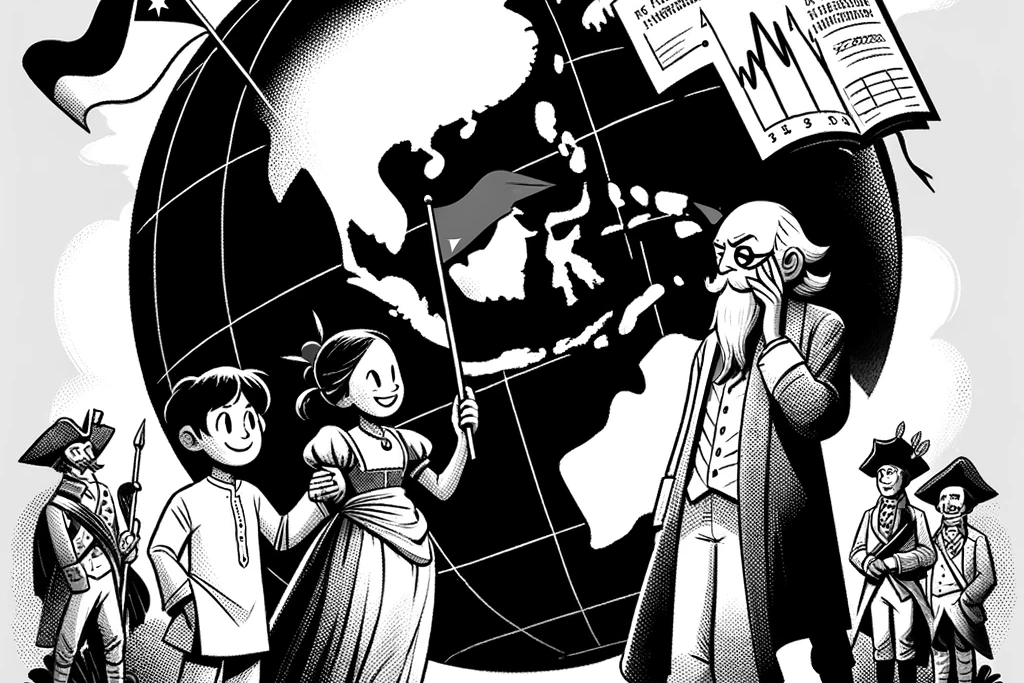
PARIS, February 7th, 1824 — In the latest dispatches from Paris, a singular report has emerged from Madrid, dated January 30th, touching on an insurrection of notable scale in the Philippine Islands last summer, a revelation that the Spanish Government has been meticulously documenting. This piece of intelligence, though sparse, underscores the burgeoning unrest in colonial territories, a theme that resonates with contemporary geopolitical tensions.
Turning to the financial markets, the fluctuation of French Funds as of February 4th provides a telling snapshot of the economic sentiment. The Five per Cents experienced a slight uptick, opening at 96.26 and closing at 96.55, indicative of investor confidence or perhaps speculative maneuvers in anticipation of political stability. Additionally, the varied performance of other financial instruments, including the Loan of 1823 and various stocks and rents, reflects a nuanced economic landscape across Europe.
The West Indies have likewise been a theatre of tension, with Martinique averting a potential insurrection through the preemptive detention of suspects. This incident has unveiled a network of treasonable correspondences spanning Europe, the English islands, and St. Domingo, hinting at a complex web of political and social dissent against the backdrop of the abolitionist debate in England.
Moreover, South American intelligence, notably from New York papers dated to the 16th of the previous month, elucidates the region’s stance against external dominion efforts, particularly by the Holy Alliance aiming to reassert Spanish control. The narrative of a self-assured populace, backed by a seasoned army and fortified coastal defenses, especially around Puerto Cabello, encapsulates the spirit of resistance that has been cultivated through prolonged conflict.
The plight of foreign merchants in La Guaira, expelled by a decree from the Colombian Government, yet petitioning for a grace period to settle their affairs, underscores the economic disruptions and the shifting alliances in the wake of independence movements.
Lastly, the legislative maneuvers within Canada’s Lower Province to address commercial relations with the United States and the illegal importation of tea and East India goods highlight the intricacies of colonial trade policies. The petition to the British Government for direct importations from India or a regulated trade with the United States reflects a pragmatic approach to economic challenges, one that merits close observation for its implications on international trade dynamics.
⁂
The content on this website is for entertainment purposes only.
Much of it has not been thoroughly reviewed by humans,
although we do get a blast from reading it ourselves.
But it should absolutely not be cited
as a source for anything other than itself.
We use OpenAI’s GPT-4 API to extract text
from the public-domain archive of The Times,
and rewrite this to contemporary standards.
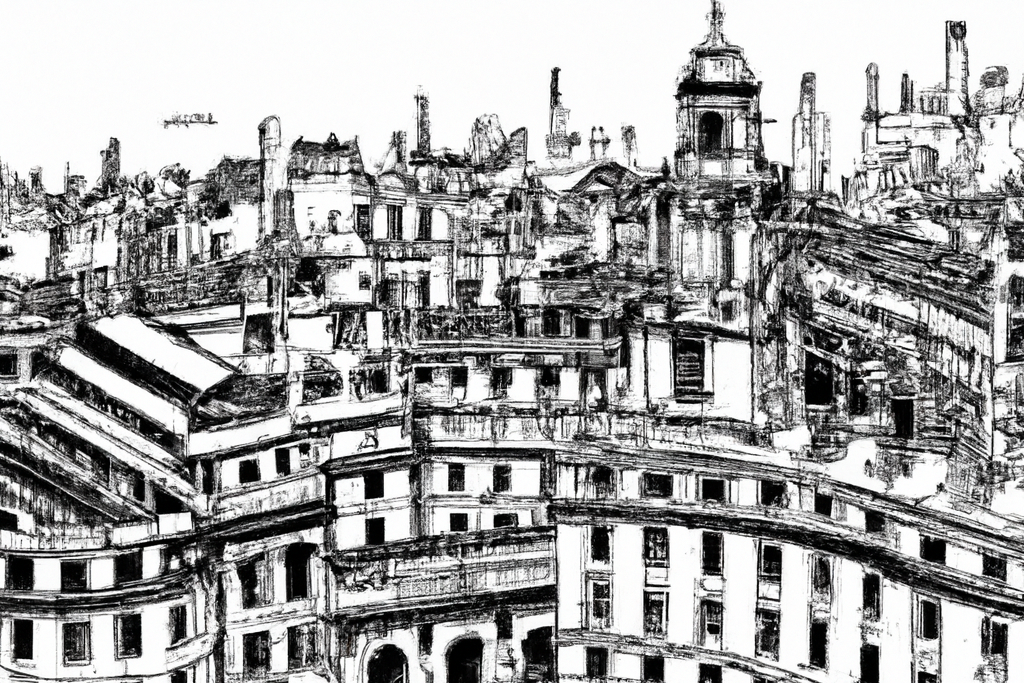
Graphics are also largely AI-generated.
This website is supported by advertising and donations!
Please consider supporting today’s sponsor,
Cheap, Nice Looking Earrings by clicking here to learn more.
Please also consider making a donation here—
we get so excited every time we hear the bell ding,
and there’s no donation too small!



 The Long Ago Times
Leave a comment