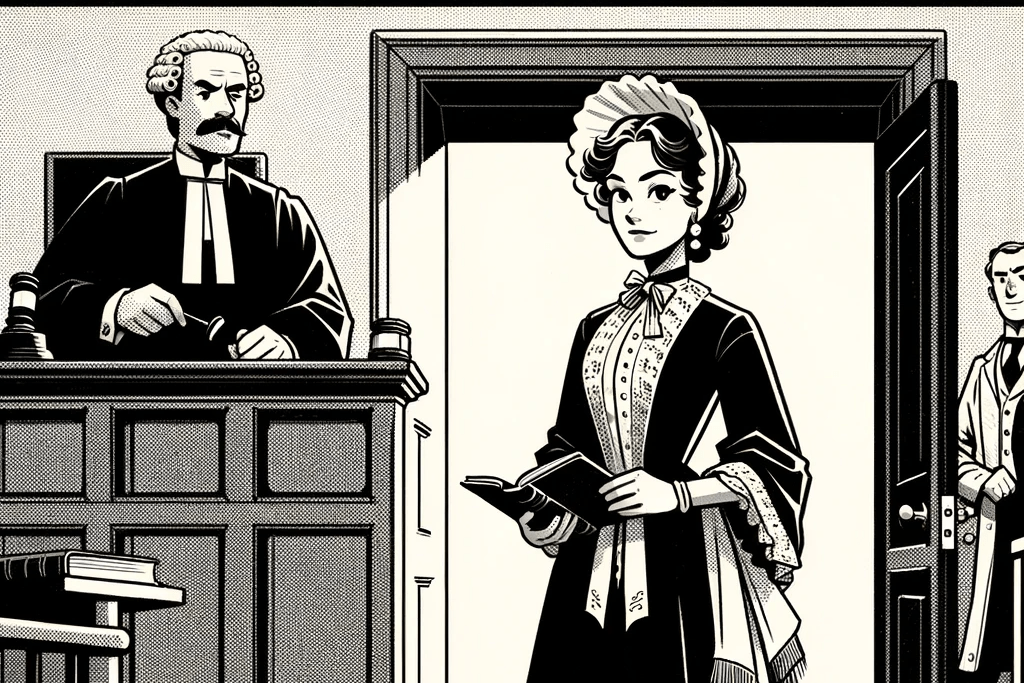
LONDON, February 5, 1824 — In a notable case before the Court of Chancery this Wednesday, the legal community witnessed a peculiar instance of marital controversy and judicial intervention, encapsulated in the case dubbed “Stolen Marriage.” The heart of the matter lies in the unauthorized wedding of a young ward under the court’s protection, which has prompted a series of legal maneuvers and ethical questions surrounding consent, guardianship, and the boundaries of clerical and familial responsibilities.
The central figure in this drama is a young lady of 14, whose intellectual development has seemingly outpaced her physical age, prompting Mr. Hart, representing the interests of the ward, to seek judicial redress. The young lady, educated under the guardianship of the Byers family, found herself entangled with Mr. James James, who, aided by his brother, a beneficed clergyman, and another clergyman, Mr. Evans in Wales, orchestrated an elopement and subsequent marriage, thereby flouting a prior court order prohibiting such an action.
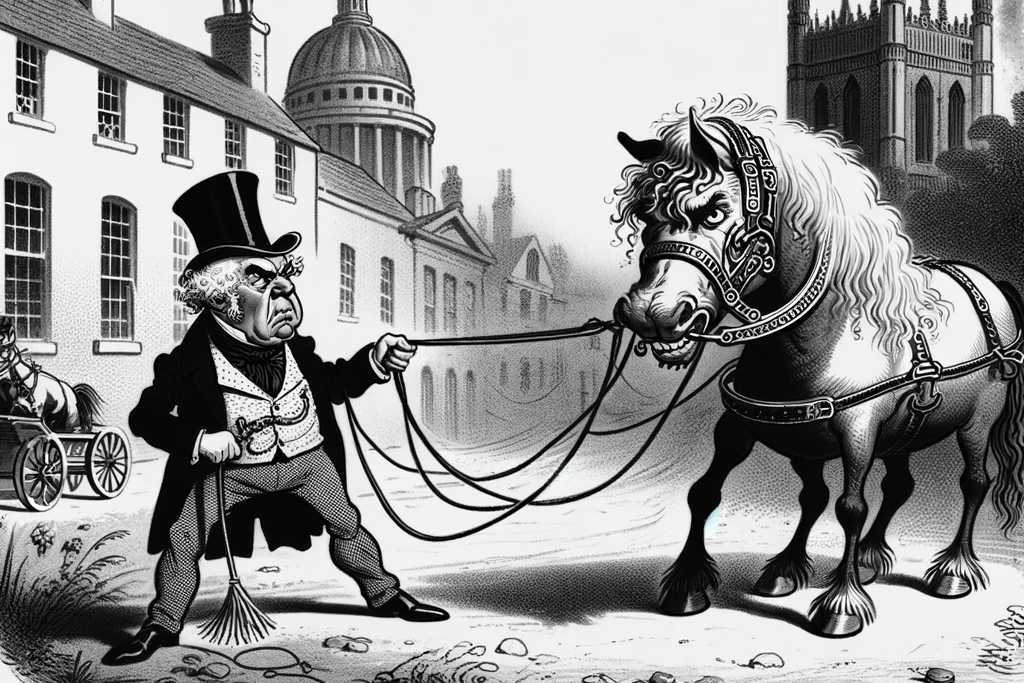
The case took an unexpected turn when Mr. Hart, upon further investigation, absolved the accused clergymen of any wrongdoing. It emerged that Mr. John James, the elder brother, had unwittingly facilitated the elopement by lending his horse, unaware of its intended use. He, along with his daughter, also a school friend of the ward, found themselves inadvertently caught in the unfolding drama. The younger James and his bride’s hasty decision to marry was executed with the assistance of Mr. Evans, who was misled about the bride’s age, believing her to be 18.
The narrative further complicates as the court learned that the husband, perhaps anticipating legal repercussions, has since fled to France, leaving the young bride in the custody of her guardian. In light of these developments, Mr. Hart’s current plea before the Lord Chancellor seeks to secure a separate maintenance for the ward, funded from her £12,000 estate, while ensuring that her estranged husband exerts no control over these finances.
Adding a layer of complexity is the revelation that the ward is illegitimate, nullifying any presumed parental consent to the marriage—a detail that the Lord Chancellor acknowledged while expressing willingness to arrange for the ward’s maintenance devoid of her husband’s influence.
Furthermore, Mr. Hart’s request for an order compelling the husband’s court appearance underlines a broader judicial effort to rectify the situation, despite the husband’s apparent belief that his absence from the jurisdiction spares him from legal accountability—a misconception the court is keen to dispel.
This case, while rooted in the specifics of familial and clerical conduct, gestures towards broader themes of legal authority, the rights and protections of wards under court care, and the nuanced interplay between personal intentions and public duties. As the court anticipates delivering a final judgment on the Covent Garden Theatre case, the legal community remains engrossed in the unfolding implications of the “Stolen Marriage,” a saga that encapsulates the perennial challenges of governance, guardianship, and the quest for justice within the complexities of human relationships.
⁂
The content on this website is for entertainment purposes only.
Much of it has not been thoroughly reviewed by humans,
although we do get a blast from reading it ourselves.
But it should absolutely not be cited
as a source for anything other than itself.
We use OpenAI’s GPT-4 API to extract text
from the public-domain archive of The Times,
and rewrite this to contemporary standards.
Graphics are also largely AI-generated.
This website is supported by advertising and donations!
Please consider supporting our sponsors
by clicking the affiliate link on today’s lead article.
Please also consider making a donation here—
we get so excited every time we hear the bell ding,
and there’s no donation too small!



 The Long Ago Times
Leave a comment