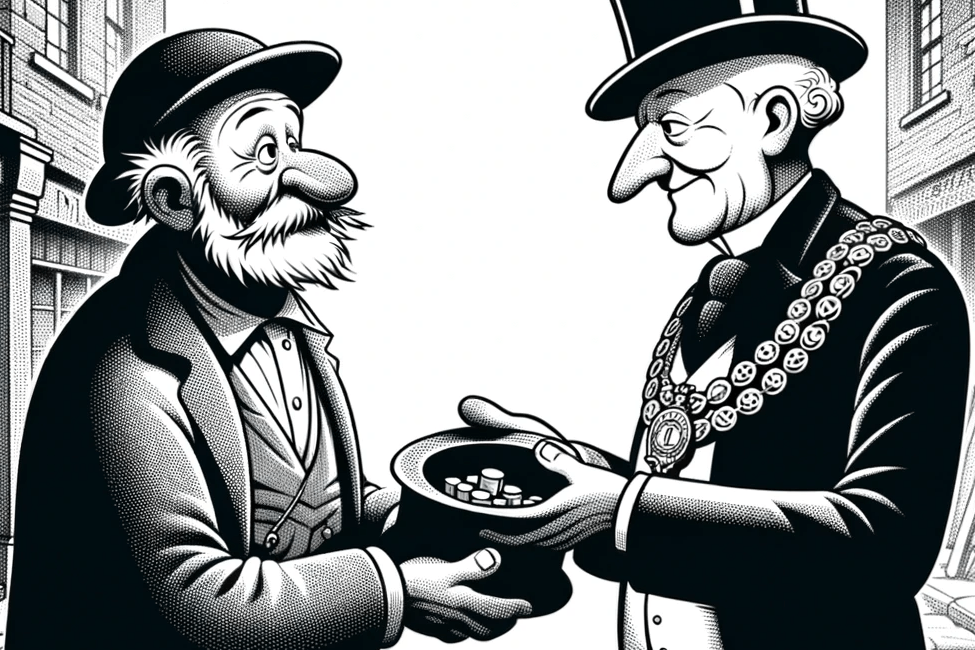
LONDON, February 5, 1824 — In a recent unfolding at the Mansion House, a laborer found himself at the center of a legal quandary, accused by an attorney of the East India Company, Mr. Smith, of pilfering a minor quantity of sugar. Despite the gravity of the allegation, the evidence presented was deemed insubstantial for a conviction. The accused, an elderly individual of previously unblemished reputation, was allegedly observed in proximity to a sugar cask, with the contentious sugar discovered in his hat thereafter. However, the lack of direct observation of the theft left the Lord Mayor skeptical of the case’s merit in a judicial setting. Mr. Smith’s insistence on a trial, citing the need to safeguard the company’s interests against theft, was countered by the Lord Mayor’s concern for the accused’s familial responsibilities and hitherto impeccable character. Ultimately, the Lord Mayor’s decision not to proceed with a remand highlighted a preference for caution and compassion over punitive measures for alleged minor offenses.
Separately, in Bow Street, the Thompson brothers faced serious allegations of substantial theft from the residence of T.P. Macqueen, Esq., M.P. A jeweler, implicated in the case, provided testimony regarding a pearl necklace associated with the crime. Despite initial suspicion, insufficient evidence led to his role being reassigned from suspect to witness for the Crown. This incident underscores the complexities of identifying and prosecuting receivers in the chain of stolen goods.
In a distressing account from Marlborough Street, a woman in dire circumstances sought assistance, only to face rejection and disparagement from parish officials. Her plight, exacerbated by illness and poverty, was brought to light by community members, prompting a magistrate’s intervention. This incident reflects societal challenges in addressing the needs of the most vulnerable, highlighting disparities in access to care and the critical role of judicial oversight in advocating for humane treatment.
These incidents, spanning from allegations of theft to the neglect of societal obligations toward the impoverished, illuminate ongoing debates around justice, corporate protection, societal welfare, and the ethical responsibilities of individuals and institutions. They serve as a contemporary reflection on the multifaceted nature of law, order, and humanity in urban life.
⁂
The content on this website is for entertainment purposes only.
Much of it has not been thoroughly reviewed by humans,
although we do get a blast from reading it ourselves.
But it should absolutely not be cited
as a source for anything other than itself.
We use OpenAI’s GPT-4 API to extract text
from the public-domain archive of The Times,
and rewrite this to contemporary standards.
Graphics are also largely AI-generated.
This website is supported by advertising and donations!
Please consider supporting our sponsors
by clicking the affiliate link on today’s lead article.
Please also consider making a donation here—
we get so excited every time we hear the bell ding,
and there’s no donation too small!


 The Long Ago Times
Leave a comment