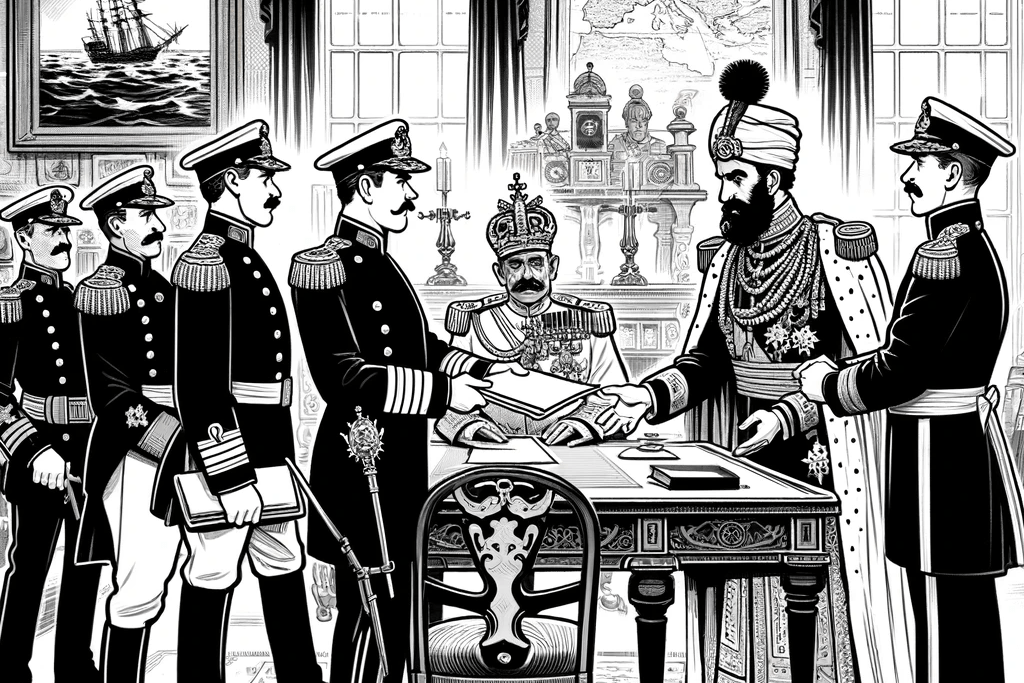
TUNIS, February 5, 1824 — In a striking development in the Mediterranean, the British Royal Navy has successfully negotiated the release of Greek and other Christian captives held by the Bey of Tunis. The Royal Navy’s intervention, led by the esteemed Captain G. W. Hamilton of the Cambrian frigate, has been a decisive factor in this resolution. Known for his exceptional skills and decorum, particularly noted during his tenure in Smyrna, Captain Hamilton executed the directives of the British Commander-in-chief in the Mediterranean with precision and firmness.
The operation commenced with the arrival of His Majesty’s ship Medina, a 36-gun vessel under the command of Captain Hay, at Portsmouth on February 3. The ship carried vital dispatches from Tunis, detailing the squadron’s actions against the Bey of Tunis to secure the release of the captives, who had been forcibly taken and enslaved.
Captain Hay, upon obtaining pratique, wasted no time in delivering the dispatches to the Admiralty, leaving Portsmouth shortly after his arrival. The Medina had departed from Tunis on the 4th of the previous month and made a stopover at Gibraltar on the 7th.
The British naval force presented a formidable front in the Mediterranean. The fleet, comprising the Cambrian, Euryalus, Medusa, Rose, Despatch, among others, exerted significant pressure on the Bey. This show of strength, coupled with the no-negotiation stance adopted by Captain Hamilton, led to a swift and successful conclusion of the affair. The Bey, recognizing the gravity of the situation, conceded to the demands and released the captives.
This resolution not only marks a significant victory for the British Royal Navy but also underscores the prevailing British stance against the slave trade and the protection of Christians in foreign lands. The operation’s success further cements Britain’s influence in the Mediterranean region, demonstrating its readiness to deploy naval power to uphold international justice and human rights.



 The Long Ago Times
Leave a comment